Two months ago, back when I was in Singapore - and representing my previous employer, I presented at Crowdsourcing Week on Crowd Advertising Success Stories and Challenges. The video's now live, and the presentation's on SlideShare, so now you can follow along and relive every crowdsourced moment. Or something like that. You can also head to Crowdsourcing Week's YouTube channel to catch many more videos of some of their excellent speakers. Enjoy the crash course.
I'm excited to share a new publication with you, something that I think is a pretty amazing collection of advice and wisdom from 23 of the smartest marketing leaders. They're all answering the same question: "What advice do you have for a new CMO?" Their advice for chief marketing officers is all gathered here, and I think if you're even remotely interested in marketing, this should be something that you'll want to bookmark, download, and share. If you do share it, and if you have advice of your own to share, join the conversation with the #newcmo hashtag.
Here's what really wound up being an e-book; read below for more of the story.
In June 2013, I joined agency MRY
as Chief Marketing Officer (CMO). It’s my first time in such a role.
On my first day the job, I posted a
note to a private community asking some friends from my professional sphere,
“What advice do you have for a first-time CMO?”
The responses were inspiring. Right
away, I knew I had to share them, and soon I had permission from everyone to
post their advice publicly. I was hungry for more though. I reached out to some
others who held marketing leadership roles, worked with CMOs, or have given me
great advice in the past. Many of them fit all three criteria. More advice
poured in, representing hundreds of years of executive leadership experience.
While this advice originally
started as some private pointers for one agency’s new CMO, it’s relevant to
marketers in a range of industries, and to people who aspire to marketing
leadership positions. I know I’ll be learning from this advice for years to
come. Maybe you will too.
As for you, if you have advice to
contribute, share it online with the #newcmo hashtag, and
you can email it over to me at david.berkowitz @ mry .
com. Perhaps there will be an updated or second edition as more comes in.
Who are the advisors?
These executives represent major brands such as Comedy Central, Cox, Ford, and PepsiCo, along with startups such as Causes.com, Collective Bias, and LocalResponse, plus some running their own consultancies. Follow them, and in the e-book, the notes field has their LinkedIn profiles as well so they're even easier to find.
Hi from Singapore, or as they say in Singapore, Hi from Singapore (the joys of visiting former British colonies...).
Today, I'm presenting at Crowdsourcing Week here, a conference with impressive speakers from all over the world talking about different opportunities for and ramifications of crowdsourcing. I'm honored to be among them, giving a talk on how crowdsourcing impacts advertising and marketing.
The presentation is available via the shortened URL bit.ly/crowdads, and I've also embedded it below. Note this presentation below is not only annotated, but it includes a number of examples that I couldn't share in the 20-minute talk, so this is the director's cut.
Also, as usual with my Slideshare presentations, if you want to know the source material for anything, including images used, just refer to the notes on each slide. You can download the presentation as well.
Let me know what you think, and what other examples should be included here.
eMarketer has a new report out on a topic near and dear to me, "Real-Time Marketing: Speeding Up the Creative Process" (read more about it in eMarketers' newsletter article on it).
The chart below, via GolinHarris, shows this real-time marketing thing may actually move the needle for brands, whichever needle marketers are looking to move.
(image courtesy of eMarketer Inc)
I have a few mentions in the report. Here are excerpts:
When deciding when to pull the trigger on a real-time opportunity, Oreo's digital agency, 360i, considers three factors, said David Berkowitz, VP Emerging Media:
* Is the moment that is happening brand friendly?
* Are there influencers online and available to extend the message virally?
* Is there an opportunity to 'surpise and delight' the consumer?
Then...
"What's going to define it well is not the Super Bowl. I'm much more curious about what happens on a typical Wednesday. Making social currency part of the brand identity - that is a bigger challenge and bigger opportunity." ...
"The biggest thing we can do to speed up the creative process is generate trust from our clients. Trust and real-time marketing are interwoven."
A snapshot of a Bagels & Berky session from Atlanta; yes, the bagels are better in NY, but "Grits with Berky" doesn't have the same ring to it.
I recently shared some highlights of my pet project at 360i on 360i's blog:
At carbohydrate-crazy 360i, a number of us gather every other week late afternoon Wednesday for Beer with Berky and first thing Friday for Bagels with Berky (both abbreviated as BwB). At these sessions, anyone who shows up takes part in discussions about new technologies, media, trends, and industry news, and I – the eponymous Berky – get to serve as host and moderator.
The notes from all of this year’s sessions spanned 36 pages, with hundreds of links and dozens of supporting documents. To give you just a taste of what we’ve covered, here’s a more consolidated version. For the full effect, grab a Guinness or a bagel (or both!) while reading.
My colleague running 360i's blog did such a great job laying out the post that I'll refrain from sharing it entirely here, so check it out and let me know what you think should be a focus in 2013.
I normally avoid infographics, but in this case, consider it an executive summary for a longer report on marketing predictions from a number of people I admire. Download the full report from ExactTarget.
Editor's note: This post has been updated from July 2009 when it referred to Wikimobipedia. The site is now Wikimobidex as per below.
I received an email from Jamie Wells, US Mobile Director from OMD, about a new site he launched, Wikimobidex. He wrote when it first launched:
He wrote:
I wanted to let you all in on a little side project that I've been working on, and was hoping you'd embrace it for the good of our industry. The site is called wikimobidex.org, and it's basically a public wiki where mobile marketing buyers can easily collect the info they need (case studies, contact info, audience comps, etc) to begin their planning process.
With our space moving so fast I felt the industry would benefit from a place that "keeps up with mobile (so you don't have to)", and so far things have been going pretty well. I've yet to publically publicize the site (that's coming soon), and so far I've got most of the major mobile players involved - over 50 companies - in less than a month.
I love this idea for a number of reasons. One is that my least interesting collection is my media kit library, so having everything together on the web will potentially make one part of my job easier.
The other is that everyone Jamie sent that email too worked at different agencies that have some involvement with mobile. It’s safe to say no agency is going to win any business because of how current one’s media kit is, so this kind of collaboration will benefit everyone and threaten no one. Yes, some agency planners and strategists will probably discover a few more potential vendors and partners through this, but again, that alone isn’t going to come at another agency’s expense. And mobile’s an area where there’s so much going on but often in fits and starts, so it’s great to have areas where people bring it together.
Originally published in MediaPost's Social Media Insider
We're getting so good at motivating consumers that we're motivating them to death. If you thought it was tough to bring Lazarus back, just wait until we have to revive our consumers.
We'll get to that challenge shortly. Let's backtrack to the present, where I have a confession to make: I love social gaming.
First, I love it as a consumer. I'm level 700-something in Zynga's Mafia Wars. I'd tell you the exact level, but by the time you read this, it'll be a few increments higher. I'm very good at it. I click the right buttons at the right time while sharing content with friends who play. I've purchased virtual currency with real currency -- on occasion, in small batches. I love it enough that I had to set a rule that I'll only actively play two such addictive games concurrently. I traded Café World, a fellow Zynga creation, for ngmoco's We Rule, a mobile, medieval version of Farmville. It's much cooler than Farmville, though; there are magic shops and spy towers, and -- my personal favorite -- magic cauliflower. Okay, so it's not that much cooler than Farmville. But I like it.
I also love these games as a marketer. These games are masterful at getting people to do something. Every person who plays becomes an automaton, exemplified by the arc in the series "Lost" where stranded survivors slaved over pushing a sequence of buttons every 108 minutes in an underground bunker. The only difference: the button-pushing sequence in "Lost" proved to have a purpose. It's from an old season, but I won't spoil the show; I'll only spoil the fun of these social games.
Beyond loving the games as a marketer, I love the psychology. You can figure out just the right reward at the right interval to keep people hooked, to get them to convince their friends to join, and to spend money for virtual trivialities. When I play Mafia Wars, there's the superficial enjoyment, and then the amazement at how they find new ways to lure me in, with the occasional frustration of when I have to click too many buttons.
The gaming doesn't just happen in games. I earn badges everywhere now -- in Foursquare, which made them famous, and in Miso, which is like Foursquare for watching TV and movies, and in Glue, which invented "liking" content across the web before Facebook, and in Gowalla, which calls its badges "pins," and in Whrrl, which calls them "societies." The applications are all different, but the psychology is the same.
Here's the contract you implicitly sign when engaging in these activities: "Complete enough actions and you get some form of recognition, which may take the form of social currency if it's publicized." Now, here's the fine print you never, ever see: "We forever benefit from your actions because your actions count as data, and data grows more valuable over time as we collect more and learn how to use it. But the recognition is short-lived, too inconsequential to take pride in, and so fleeting that you must keep coming back for more or it feels like it was all for nothing. Ha ha ha."
As marketers, we can bring more to the table than recognition. We can offer discounts and free products and content from our exclusive partners and inside information. We have what you want and we can give it to you.
Both camps are learning from each other. Combine fleeting recognition and a free sample, and all the bases are covered.
What happens when you strip all of it away, though? Strip away the incentives, the currency, the constant calls for coming back. Strip away the requirements for how many friends you need. Strip away the artifice and the ruses.
What you have then is the kernel of intrinsic motivation. It's what keeps people going. It's exemplified by "fun" -- whether that fun is scaling a mountain or indulging in a rich meal or reading "On the Origin of Species."
You'll counter that external forces are at work in those situations. How much of the fun is the act of doing it, versus telling people what you did: how high you climbed or how much you ate or how erudite you were? There are no badges for those acts, though, no one telling you what your self-destructing mission is that you must choose to accept.
Former students of undergraduate psychology courses or readers of pop psych magazines may recall the 1973 study "Undermining Children's Intrinsic Interest with Extrinsic Rewards" by Mark Lepper and others. The title gives it away: external rewards kill internal mojo. The authors warn in the introduction of "the possible side effects and long-term consequences of powerful systems of extrinsic rewards."
Powerful systems are in place, but these systems in their current form are too new. We are focused on the short-term results: spikes of fans, clicks, engagement, or whatever action we're trying to incentivize.
It won't last indefinitely. We're creating a motivation bubble. We'll fill it with extrinsic rewards until it pops. We'll try to revive it with more, and it will be too late. We'll call out for the intrinsic motivation to return from hibernation, and it will -- it's how people survive. But we'll have to find new ruses and rewards to get back some semblance of what we had. Even if all we had was a bubble.
My friend Jeremy Epstein, who happens do so a fair amount of marketing for authors and is a great writer in his own right at the blog Never Stop Marketing, just came out with a great, brief read a little longer than his usual entries. Go figure - weeks ago I convinced him to add it to Scribd for easily downloading and of course I then didn't have time to write it up.
The overall concept is to think like a dandelion to get your message to 'go viral.' It's hardly the only analogy in here - rather than getting too literal with the floral motif, he pulls in lessons from Johanes Gutenberg, Karl von Clausewitz, Microsoft Research, and then the Cluetrain Manifesto for good measure.
One of the great takeaways here is around prototyping, which he quotes Tim Brown's summary of "failing faster to succeed sooner." And hence it goes back to the dandelion - with lots of opportunities for spreading and pollination.
It's all of 11 pages - long enough that you may want to print it out and mark it up, short enough that you don't need too long to get the gist of it. But you may well want to keep it around to read a few times. I know I'm due for another run-through.
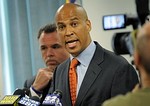
Have you shoveled any of your consumers' driveways lately? Just
about everyone but Newark, NJ Mayor Cory Booker can put their hands down.
Booker, a savvy enough marketer that he can get some positive ink
for Newark, is not a bad role model for marketers. As Mashable
reported yesterday, New Jersey radio show host Ravie Rave (with all of
about 250 followers) tweeted that her 65-year-old father needed help shoveling
snow, and Booker promptly responded. Booker asked where her dad lived and
then tweeted, "Please @BigSixxRaven
don't worry bout ur dad. Just talked 2 him & I'll get 2 his Driveway by
noon. I've got salt, shovels & great volunteers." The story went on to
make headlines on CNN and elsewhere.
Newark's mayor has engaged in bigger publicity stunts than that,
but this is one that may well stick around as part of his brand. It's the kind
of thing people will remember - he's the mayor who showed up with a shovel when
someone's dad was snowed in. Even before this made headlines, he already had
over a million followers to witness his conversation with Rave.
What Booker instinctively grasps is that in social media, people
need to know what's in it for them. That may seem obvious, but it's not true of
all forms of media. When you see an ad on television, do you really care if the
marketer's doing anything for you, or do you just happen to pay closer
attention if the ad's really funny or relevant? When you see an ad in a
magazine for tomato sauce or over-the-counter medication, do you care if
there's something in it for you, or do you just turn the page? Social media has
a higher threshold to cross, and to break through, that value proposition has
to be abundantly clear.
When a marketer hits a homerun like Booker did, it can become part
of the brand's mythology. A number of brands have had these ‘Booker moments'
with social media:
· Comcast, once symbolized by the technician
who fell asleep on a customer's couch, became known among Twitter users and
others as a company redefining how customer service works through social media.
· When Coca-Cola got started on Facebook, it built on the
work done by super-fans Dusty and Michael who organically created a presence for the brand, setting
the ultimate example of a brand working with consumers rather than fighting
them for control.
· Jeep was one of the first marketers to harness
Flickr, and it still does, making fan photos a centerpiece of its
community.
These aren't all exact moments, but they're key milestones in how
brands have changed the way they relate to consumers. For large brands, from
Coke to Cory Booker, this becomes part of the brand lore. For smaller brands,
like FreshBooks or New York's Roger Smith Hotel, social media helps define the
brand entirely. In each scenario, these brands are thinking about game changing
ways to make an impact by providing value for their target audiences.
Brands can fall into a trap doing this if they're not careful. If
the value proposition lives and dies by giving away free stuff through social
media to boost reach or add bodies mailing lists, then the brand just triggers
a Pavlovian response where consumers are trained to expect handouts. But when
the value is part of something, part of a brand identity and mission, then it
starts to matter. When Dell started blogging after a period where consumers
felt neglected and its brand was hurting, many wondered if it was really coming
around. But when Dell started IdeaStorm
to solicit customer feedback and act on it, this became a signal of Dell's
revival and part of its identity.
Marketers should look for Booker moments as opportunities. At
times it might feel like a ploy, and that's not necessarily a bad thing. It
reminds me of a passage I recently came across, oddly enough, in Robert
Wright's The
Evolution of God where he discusses how tolerance of others
developed in Western religion: "What starts as a tactical ploy... can for
various reasons evolve into a truer, more philosophical appreciation of
tolerance... Having a pragmatic, selfish reason to coexist with people can be
(even if it isn't) the first step toward thinking about them in a nonselfish
way." For our purposes, selfishly trying to meaningfully connect with and
provide value for consumers can make such relationship building a cornerstone
of how brands operate.
That's why I'm not too
concerned over how calculating or sincere Booker was when he shoveled that
driveway. If appreciates what he did, he will seek to build on it, and either
way he can still inspire others.
David Berkowitz is Chief Marketing Officer at agency MRY. A frequent speaker and media pundit, he has been published hundreds of times in MediaPost, Ad Age, eMarketer, Mashable, and elsewhere. Get to know him in the links below the blog's header.


![Reblog this post [with Zemanta]](../../../reblog_e_x-id-afcbaa3f-5632-4741-b37e-abe2bb743451.png)