This is a blog about ideas, ultimately, even if how those ideas are marketed, or shared with others, is a major focus. While this blog tends to discuss how such ideas are shared online, here's an exception. Tuesday night September 25 at 6pm, Tom Brokaw interviewed New York City Mayor Michael Bloomberg on the famed Cooper Union stage by Astor Place in Manhattan. Given that this Mayor presides over the largest, arguably most important city in the most influential nation in the world, and given the rampant rumors that he may seek to lead this nation, his ideas carry more weight than most others. The post below is an abbreviated transcript of the event, which I had the pleasure of attending -- on the Mayor's list no less (thanks to someone who I guess i can call a mutual friend of mine and the Mayor's). Direct quotes are in quotes; what isn't is paraphrased unless so noted, and the quotes and paraphrasing are recorded as painstakingly as possible. Please, however, note that these are abbreviated notes, so it's possible some appear out of the exact context.
Overall, Bloomberg was especially strong on education, healthcare, and, interestingly, international relations. He trailed off a bit when discussing Iraq, and the hemming and hawing over his 'will he or won't he' election bid seemed to come non-stop (Brokaw had a field day with it). He did have one major gaffe; refer to the American Revolution comment below. He could still use a little polishing, but unlike the declared candidates, he's also confidant he has time on his side.
On that note, on to the event's coverage, following the slide show:
Created with Admarket's flickrSLiDR.
Initial remarks: Bloomberg's here as an important thinker ahead of the 2008 elections. Also noted: Starting with Lincoln, seven presidents have spoken here.
Governior Cuomo: More big issues at play than he can remember for any presidential election. "There is a unique need this time for ways to assure those issues receive the fullest public discussion and debate... What has passed for discussion so far is simply not enough." He dired the 30-second commentaries and hand-raising in debates. The focus tonight: education, the environment, and poverty. [This wasn't entirely true - it was moreso education, Iraq, and whether he'll run.]
On Bloomberg: He made himself out not to be a politician, and thus became one of the most popular politicians in the city.
6:11: Bloomberg and Brokaw take the stage. Rampant applause.
Brokaw's intro: "He's a man who knows how to give a political answer." Brokaw's suggestion: give UN diplomats Metrocards during the General Session..
Bloomberg: If we have congestion pricing, we won't have that problem.
Brokaw: Would you invite Ahmadinejad speak?
Bloomberg: "For them to invite world leaders... he lets his deans do it, and that's what universities do... We are victims of terrorism because we have freedom of speech... They should be allowed to do it, and that's their choice... We should have low-level discussions with every country in the world, even our worst enemies." It's "irresponsible" not to. He wouldn't recommend talking to Iran at a high level. "You have relations with the other side even if you're at war with them," noting the need for a back-channel to discuss things, at the very least to let humanitarian aid get through.
Brokaw: Why not high level talks with Iran?
Bloomberg: He's a sponsor of terrorists. Columbia's one thing, but Ground Zero's more sensitive. He does welcome everyone at the UN.
Brokaw: Are we more secure in NYC now than in 2003 or 2004?
Bloomberg; "You never know that." You only know when you're wrong, but "we are making a better effort."
Brokaw: Some say Giuliani is exploiting his role as mayor.
Bloomberg: 'I invited Giuliani, former Governor George Pataki...' "We want people from all over to come... Keep in mind Rudy Giuliani was the mayor at the time and was the face of New York for the three months or so after the event until I took over."
Brokaw: How's the presidential race shaking up?
Bloomberg: "I find both parties - blame ourselves, don't blame the candidates - we demand instant answers... we allow candidates to duck the tough questions because the press doesn't ask the tough questions because we don't demand that the press ask the tough questions." The press, while free, has responsibility. "We don't grill candidates enough." You don't get answers to 'why' often enough. "We trust people too much." "This country's in big trouble and somebody's got to pull it out. We have lost our relationships around the world. In a world where we are trading more, we have an international fight against terrorism, we share medicine and science, together we are hurting our environment, and we are hurting the same planet and we are all in this together... We are not respected. Somebody's got to go out and rebuild those relationships. We have an awful lot to be proud of... but there is an arrogance... that doesn't play will in other countries around the world." "What should the next president do?" Iraq's a big issue ("there's no good choices here"). While we work on that, there's more to do. "The real thing you've got to do is rebild these relationships. We can't go it alone." "Then there are domestic issues - trade, the ecology of the world, the environment... we certainly need leadership to attack real problems here." Healthcare's a major issue - Western Europe spends less per capita per year on healthcare but has a longer life expectancy. In Europe, you are more likely to die while waiting for major surgery, but you're less likely to need that surgery... "The socialized European model... may not be all that bad" due to the life expectancy and lower costs.
Brokaw: Do we need to go to a single-payer healthcare system.
Discussion continued on Iraq, with little of note here.
Brokaw: Are we not making enough sacrifices here as civilians?
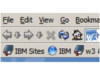 I've never played around much with Firefox browser themes, but I found one that's actually useful: Littlefox. As I'm one to experiment with lots of buttons and toolbars, the clutter's usually unbearable. Littlefox shrinks all of that so that each button and toolbar takes up the least amount of vertical space while still being readable. If your eyes aren't completely shot, this will minimize scrolling and allow for easier screenshotting if you're one to do that for presentations.
 Ian Ayres, author of one of the better new business books out now,