I've got a new byline in Ad Age on the latest Twitter controversy, as a startup doesn't like how Twitter is changing course. The column begins:
Twitter has made plenty of enemies this year, but one just took Twitter to court and won an opening battle. As tempting as it is to root for the underdog in PeopleBrowsr vs. Twitter, the only crime Twitter may be guilty of is false advertising.
PeopleBrowsr, a social media analytics company, has paid for full access to Twitter's "fire hose" – its entire database of tweets – since 2008. Twitter cut off access, claiming it did so with the 30 days' notice required by its contract. PeopleBrowsr was not amused, so it took Twitter to court and won a restraining order that temporarily requires Twitter to keep the fire hose flowing to its longtime customer.
Today's Social Media Insider column, originally published in MediaPost
Marketers, if you're looking for tips on how to make the most of
Twitter's new ad platform, skip this and harass your favorite Twitter guru.
Heck, my cohort Cathy Taylor already gave a good taste of what's
new about the ad model. There's enough sound
advice out there.
Instead, here are six simple steps you can take to fail miserably
with Promoted Tweets:
1) Treat it like any other media buy. If
Twitter's calling it an ad platform, then just hand it over to your media
buyers and they'll take care of everything. So what if Twitter's own executives
glossed over all of the basic elements of what goes into a media buy? They
barely discussed what Promoted Tweets costs, how you'll determine the reach of
the keywords, and what targeting options will be available beyond the keyword
itself. It's still an ad platform, so how hard can it be? Your media buyer will
find a way to spend your money.
2) Write ad copy to run as promoted tweets. If
you want to make sure to alienate as many Twitter users as possible in a short
amount of time, make sure every tweet is talking at consumers, even yelling at
them, ordering them to do your bidding. You have only 140 characters, so why
beat around the bush with this fluffy relationship building and conversation
stuff? Why respond to your customers when you know more than they do, anyway?
This is your chance to promote, so don't blow it.
3) Invest as little time and energy as possible in the actual
tweeting. One of the problems with Twitter is that it's a lot of work coming
up with something interesting every single day, or even multiple times a day.
Real marketers come up with one tagline and say it over and over again -- it's
so easy, even a caveman can do it. Stop worrying about manning your Twitter
account and turn all of your attention to promoting tweets. That's how you'll
get rich off of Twitter.
4) Join Twitter just to use Promoted Tweets. You
need to run your ads everywhere that'll accept them, and you can't possibly
miss a social marketing opportunity. By running Promoted Tweets, you'll be able
to cross another site off your checklist and show your boss how
forward-thinking you are. It doesn't matter if you know anything about Twitter.
If you've forgotten to do the Twitter thing already, now's the perfect time to
jump on the bandwagon.
5) Stay laser-focused on the one account you manage. Sure,
there may be other people tweeting across your organization, and even across
your office. Ignore every single one of them. You've got a job to do, and it's
not about following them when you have the chance to promote your tweets above
everyone else's. That may mean you'll be bidding against others within your
company. It may also mean you'll miss opportunities to cross-promote each other
and gain visibility for multiple accounts at once. Your own blissful ignorance
is worth it.
6) Plan the owned media and paid media elements separately. Hypothetically,
say you acknowledge that multiple disciplines are at work with Promoted Tweets,
where someone (or a whole team) manages the Twitter account or accounts, and
then someone with media buying expertise manages the promotion. Don't let those
groups talk to each other. They might start figuring out how to best include
the kind of content that would work well as a promotion. Or they might learn
from the resonance scores of the ads to make the day-to-day content more
engaging. You'll be much better off keeping everyone totally separate to ensure
no learning and optimization take place.
Be sure to let me know if you follow all of my advice, as you
could earn a feature in a future column so thousands of marketers can learn
from you. You'll undoubtedly be an #epic sensation.
Have you shoveled any of your consumers' driveways lately? Just
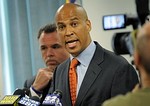
about everyone but Newark, NJ Mayor Cory Booker can put their hands down.
Booker, a savvy enough marketer that he can get some positive ink
for Newark, is not a bad role model for marketers. As Mashable
reported yesterday, New Jersey radio show host Ravie Rave (with all of
about 250 followers) tweeted that her 65-year-old father needed help shoveling
snow, and Booker promptly responded. Booker asked where her dad lived and
then tweeted, "Please @BigSixxRaven
don't worry bout ur dad. Just talked 2 him & I'll get 2 his Driveway by
noon. I've got salt, shovels & great volunteers." The story went on to
make headlines on CNN and elsewhere.
Newark's mayor has engaged in bigger publicity stunts than that,
but this is one that may well stick around as part of his brand. It's the kind
of thing people will remember - he's the mayor who showed up with a shovel when
someone's dad was snowed in. Even before this made headlines, he already had
over a million followers to witness his conversation with Rave.
What Booker instinctively grasps is that in social media, people
need to know what's in it for them. That may seem obvious, but it's not true of
all forms of media. When you see an ad on television, do you really care if the
marketer's doing anything for you, or do you just happen to pay closer
attention if the ad's really funny or relevant? When you see an ad in a
magazine for tomato sauce or over-the-counter medication, do you care if
there's something in it for you, or do you just turn the page? Social media has
a higher threshold to cross, and to break through, that value proposition has
to be abundantly clear.
When a marketer hits a homerun like Booker did, it can become part
of the brand's mythology. A number of brands have had these ‘Booker moments'
with social media:
· Comcast, once symbolized by the technician
who fell asleep on a customer's couch, became known among Twitter users and
others as a company redefining how customer service works through social media.
· When Coca-Cola got started on Facebook, it built on the
work done by super-fans Dusty and Michael who organically created a presence for the brand, setting
the ultimate example of a brand working with consumers rather than fighting
them for control.
· Jeep was one of the first marketers to harness
Flickr, and it still does, making fan photos a centerpiece of its
community.
These aren't all exact moments, but they're key milestones in how
brands have changed the way they relate to consumers. For large brands, from
Coke to Cory Booker, this becomes part of the brand lore. For smaller brands,
like FreshBooks or New York's Roger Smith Hotel, social media helps define the
brand entirely. In each scenario, these brands are thinking about game changing
ways to make an impact by providing value for their target audiences.
Brands can fall into a trap doing this if they're not careful. If
the value proposition lives and dies by giving away free stuff through social
media to boost reach or add bodies mailing lists, then the brand just triggers
a Pavlovian response where consumers are trained to expect handouts. But when
the value is part of something, part of a brand identity and mission, then it
starts to matter. When Dell started blogging after a period where consumers
felt neglected and its brand was hurting, many wondered if it was really coming
around. But when Dell started IdeaStorm
to solicit customer feedback and act on it, this became a signal of Dell's
revival and part of its identity.
Marketers should look for Booker moments as opportunities. At
times it might feel like a ploy, and that's not necessarily a bad thing. It
reminds me of a passage I recently came across, oddly enough, in Robert
Wright's The
Evolution of God where he discusses how tolerance of others
developed in Western religion: "What starts as a tactical ploy... can for
various reasons evolve into a truer, more philosophical appreciation of
tolerance... Having a pragmatic, selfish reason to coexist with people can be
(even if it isn't) the first step toward thinking about them in a nonselfish
way." For our purposes, selfishly trying to meaningfully connect with and
provide value for consumers can make such relationship building a cornerstone
of how brands operate.
That's why I'm not too
concerned over how calculating or sincere Booker was when he shoveled that
driveway. If appreciates what he did, he will seek to build on it, and either
way he can still inspire others.
"So many characters, and yet so little characterization." - Biz Stone
"Shaqulous." - @The_Real_Shaq
Yes, these are some of the reviews I'd love to get for my new book.
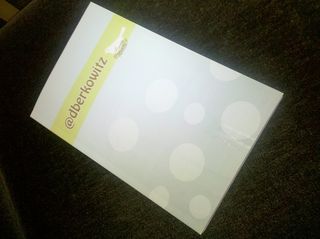
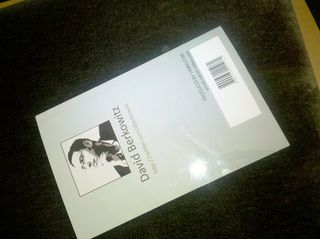
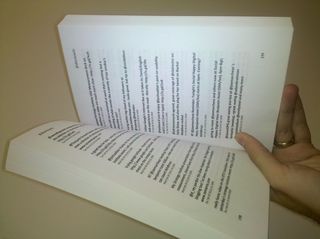
Oh, did I not mention I was published? It's quite the achievement. See, what I did was I tweeted a lot, a few thousand times even, over a few years. Then I went to 140bio.com and entered my Twitter name, and then from there logged in to PayPal. I paid all of $18.99, and a week later, a book arrived with 3,200 of my tweets, and some other personalization.
The book itself is a marvel for what it doesn't have:
A plot
Coherence
Any real reason to exist
It does have paper though. And a lot of words. And, if I averaged 110 characters a tweet (really rough guess), it has over 350,000 characters.
It also has a record of most of my tweets. It just missed the first few of mine. To think if I found the site a month or two earlier, or I had tweeted just a bit less, it would have captured them all. But I do have almost all of it.
And I have a fun novelty for the office.
And a great gift idea, which I've already sent to someone I know who will get a kick out of it.
It's not a tour de force, and I'm not sure how well it will do on Amazon's charts. I won't even read the thing. But still, it's one of the best books I've bought in a long time.
Originally published in MediaPost's Social Media Insider
It
sounds so perfect: you put a "share this" button in a banner ad and
suddenly even stodgy, old display media becomes social media. Pay for the
impressions and get the viral effect as a bonus. It's the future of
advertising!
There are just two catches to this: it's been done before, and
it's not the future of anything. It's a bell, a whistle, or maybe a bell and a whistle if
executed well. But it's not going to fundamentally change advertising, social
media, or anything else.
The latest entry in the space is TweetMeme's Adtweets, announced
in late November (and illustrated above). TweetMeme, which has become the go-to Twitter aggregator
and the most prominent source of "retweet this" buttons around the
Web, is allowing advertisers to add a retweet button to standard ad units. You
can't blame TweetMeme for overselling it: "The Adtweets are a way of
putting pressure on advertisers to improve the standard of adverts..."
While it sounds rather charming with the British accent,
it's not going to improve ad quality. Instead, it might put more pressure on
advertisers to attempt to create humorous or captivating ads that may do
nothing to help their brand. Evian's "Rollerbabies" ad just earned
a Guinness World Record by becoming the most viewed online ad ever, with
over 45 million views, yet I have yet to see any coverage of the record that
mentions Evian's market share or any other success metric from the brand's
perspective. Maybe a needle moved, maybe nothing happened, but it's hardly a
clear-cut case that a viral ad means it's successful.
The concept of sharing ads through social media isn't new. Google
Gadget Ads launched
in September 2007, and I don't know if I've ever seen one in the thousands
of hours I've spent online since then. Clearspring and Gigya have also offered
such functionality, and Spongecell makes it easy to "share with friends,
or the world - without leaving the ad." I love that this functionality
exists, but most of the time it's not necessary.
Here are four reasons why this isn't a game-changer:
1) Most
ads aren't worth sharing. There are always exceptions to this
rule -- the DVR-proof ads on TV you'll look for on YouTube and the newspaper
and magazine ads you'll rip out and save. The same applies to banner ads, but
that's relatively rare.
2) Sharing
often isn't the best call to action. Are you trying to get a
consumer to buy something? Request more information? Go to a store? Watch a TV
show or movie on a certain date? Learn more about a new product? Get exposed to
a new brand name? Think more positively about a brand? In any of these cases,
sharing competes with the primary call to action. And if the primary call to
action is to share the ad, what's the purpose?
3) Network-specific
ads work best within those networks. Consider Facebook's
Engagement Ads and Digg Ads that can be voted up or down. Each of those
advertising experiences is customized to the publisher. Yet a Facebook ad
wouldn't work the same way on the homepage of Forbes.com, and visitors to WebMD
would generally be thrown off by Digg buttons on ads running there. As for
tweetable ads, targeting can help -- a tweetable ad on TweetMeme.com or
TechCrunch will find a more receptive audience than if it ran on a mainstream
publisher. But such ads will still need to clearly illustrate why such sharable
functionality makes sense in that context. I'm skeptically inclined to think
advertisers will slap a "tweet this" or "share this" button
on less discriminately, and then call it a social media campaign.
4) Most
marketers and agencies don't plan earned and paid media together.
That makes the value proposition a harder sell. Consider a marketer running
display ads to drive traffic to its site, and (generously) 1% of
consumers click the ad. Say that marketer adds sharing functionality, the
click-through rate (CTR) drops to 0.8%, but another 0.7% of consumers share the
ad with their friends. In the latter scenario, that can be lumped together as a
1.5% engagement rate, but instead the marketer will be held accountable for the
20% drop in CTR from 1% to 0.8%. If you're still with me, let's take it one
step further. The shared version of that ad (shared 0.7% of the time) would
need a 29% CTR to generate enough clicks for those marketing strategists to
keep their jobs. Then they have two choices in this admittedly oversimplified
scenario: they have to demonstrate the value of the ad's pass-along rate, or
they have to go back to generating clicks as efficiently as they can.
I still love the idea of sharable ads. It will become more common, and
I'm sure a lot of marketers and agencies will use it in ways that achieve their
goals. But it isn't going to make advertising better, any more than YouTube has
made TV advertising better. It's just one more option marketers have online,
where some pioneers will get great PR for it, some followers will ride the hype
coattails, and most others will consider it -- if and when sharable ads make
sense for them.
Originally published in MediaPost’s Social Media Insider
It's tempting to say the best thing about the wine-tasting event Spit & Twit was the name, and maybe it was, but what made an even bigger impression was how social media is changing the nature of real-world events. It also showed the limitations of being digitally and physically social at once.
At City Winery in Manhattan, WineTwits and others hosted Spit & Twit with a few dozen wineries and importers sharing over 100 wines. Attendees were encouraged to tweet, and a good number did, with the #sptw hashtag racking up about 275 tweets during the event, plus other tweets without the tag and many more before and ever. The printed program, which I neglected to read until Nelly Yusupova (@DigitalWoman) showed it to me, listed hashtags for each wine, and WineTwits created an iPhone-optimized site making it easy to tweet about and rate each wine.
The tweets during Spit & Twit included the usual shout-outs and snarkiness, with a healthy mix of wine snobbery. Here's a sampling:
WasitRodge: Ok. WineBerry is the sexiest boxed wines ever. #sptw
leighleighsf: fave red, #ESRIOPST01/@blameitonrioja. awesome! fave white, #WIEWC07VO (harvested during full moon) #sptw
castlebuilder: #sptw Served French wine by Kentucky gal. Je t'aime #frbxscbb05y'all!
sarahmcsimmons: Dear girl in the plaid shirt, you are in our way. Could you please spit, twit, and move? #sptw
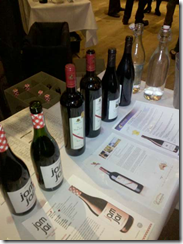
It was also a great event for taking photos. When I captured the Jam Jar and Dead Arm shiraz, the wine importer thought I was being so smart to keep a record of the wines I had, when all I was trying to do was get a good picture to tweet. As for the image's flipped orientation, I'm still figuring out how to tweet photos from the new Motorola Droid phone.
Spit & Twit felt like one of those events that's a sign of the times today but will soon feel archaic. It's as if a restaurant opened called Order and Be Served, or a musician went on the Watch Me Play Live Music and You'll Pay Another $40 for a T-Shirt Tour. Wine drinkers of a certain generation at larger tasting events will soon expect that sharing these experiences through social media is part of the event.
Right now, the process is still a bit clunky. Most people weren't tweeting, and for good reason. Imagine tasting a dozen wines (for starters), then taking a picture, crafting a message, and using the appropriate hashtags, all while finding a place to put down your wine and getting out of the way of the people on line behind you. The tweets did add some value though: attendees could look at the screen for recommendations, wine lovers not there could get some dirt (or terroir) on good wines, and the wineries could benefit from the broader buzz. Another potential add-on for future events, which WineTwits could probably build in a matter of hours if they don't do it already, is a list of the ratings, showing live rankings of the top-rated wines there.
I asked WineTwits founder Stephen Gilberg for his thoughts on the event. He said, "The level of interactivity I saw [there] was amazing and unprecedented. People were following other people's notes in real time (both via their handheld devices and onscreen) and you could see traffic flow to certain tables as the wines at those tables were being talked about."
He then elaborated more on where social media fits in with the buildup and aftermath of the event. He said, "It's definitely a learning process, and it's going to change as the market develops, but utilizing Twitter and Facebook [was] central to the event's success. You still need to reach out to traditional media to attract consumers. Email blasts are important as well. The next day the event lives on as people are still tweeting about it, and it's now a resource on WineTwits.com that will continue to grow."
You can find more of the interview on my blog, and you'll find Gilberg at many other social media-infused happy hours to come. Should you attend one, though, I'd recommend against spitting and twitting at the same time. Better still, go with a group and name a designated tweeter who can keep churning out 140 characters even after you've sampled 140 wines.
I had the pleasure of attending the Spit & Twit wine tasting yesterday hosted by City Winery and WineTwits. A column on the event will be running in MediaPost's Social Media Insider, which includes a bit of the interview with WineTwits founder Stephen Gilberg. The full interview runs exclusively here:
David Berkowitz: What exactly makes Spit & Twit different from other wine &
spirits events you’ve been a part of?
Stephen Gilberg: The level of interactivity I saw at the event was amazing
and unprecedented. People were following other people's notes in real
time (both via their hand held devices and onscreen) and you could see traffic
flow to certain tables as the wines at those tables were being talked about.
Now, searching through WineTwits.com after the event, all of this interaction
and information lives on as a resource for both those attending and not
attending. A typical event provides no means of openly sharing your notes
both online and onscreen, in real time. Check out all of these notes
entered by @HDL: http://www.winetwits.com/tweets?user_id=34451
Ultimately what made this event different, IMHO, was the tasting platform
powered by both WineTwits LIVE and WineTwits MOBILE.
DB: Did you find the crowd there was more interested in spitting or
twitting?
SG: Definitely a mix. I found that the crowd was very interactive and open
to talking, chatting, twitting and tasting. The event logged nearly 400
tweets and growing!
DB: For these kinds of gatherings, do you find Twitter to be especially
important during the initial promotion and buildup, during the event itself, or
afterwards?
SG: It's definitely a learning process and its going to change as the market
develops, but utilizing Twitter & Facebook are central to the event's
success. You still need to reach out to traditional media to attract
consumers. Email blasts are important as well. The next day the
event lives on as people are still tweeting about it, and it's now a resource on
WineTwits.com that will continue to grow.
DB: Are these kinds of events just for active tweeters? Or do you find that they
pull in new people to participate with Twitter or other social channels that
might be involved?
SG: These events are definitely not just for active tweeters. I do know
the event definitely helped to drive home adoption of twitter use and really
got people talking about Twitter and how they use it for business and personal.
Thanks Steve for the wine and event and social media insights. You can find him on Twitter at @winetwits.
Okay, not the best blog post title, but it was a big day, being featured in both The Wall Street Journal and USA Today on the same topic: real-time search. For newcomers to the field, it's the very hot field where Google, Microsoft's Bing, and a range of startups are trying to best index all of the rapidly updated statuses across Facebook, Twitter, and other social media sites.
The WSJ's Jessica Vascellaro reported on real-time search in the context of a new Yahoo deal with One Riot and included my take at the end (note: subscription required to read the whole story):
David Berkowitz, senior director of emerging media and innovation at
digital marketing agency 360i, said he believes the value of real-time
search data for businesses is greater than the appeal of data to
advertisers. He predicts that one of the biggest uses of "real-time
search engines" that produce results based on what's popular on the Web
right now, will be for queries related to breaking news. But reaching
users searching for news is far less interesting to advertisers than
reaching searchers who are looking to buy something, he said.
Jon Swartz in USA Today took a broader approach on the subject, in what was a front page story in their Money section. I also got to close out the article:
The new services are confident that the market can support them. Search
"is a huge driver of online traffic, shopping, content discovery," says
David Berkowitz, senior director of emerging media and innovation at digital-marketing agency 360i.
The topic is still fairly new as far as the media and public consciousness goes (even if technologists and academics have followed it for longer), and I had fun addressing it recently at an OMMA panel, so I'm sure I'll have more to say about it, and I definitely have a lot more to learn.
From today's MediaPost Social Media Insider. One addendum: you can also turn Twitter Lists into widgets. Brilliant.
Make a Twitter List and Check It Twice
Twitter just introduced Twitter Lists, the
biggest change to its service that ever came from the top down, rather
than from users or third parties. The best way to understand the
feature is to try it out yourself, as it's rapidly rolling out if you
check twitter.com. But I'll give you a taste of what it means for your
day job, as well as your day-to-day Twitter usage.
With Twitter Lists, any Twitter user can
create a list of other users and make the list public or private. You
can follow others' lists and see what lists you're on (assuming the
feature's live for you) by going to
http://twitter.com/[username]/lists/memberships (mine are here).
I wrote on 360i's blog about how Twitter Lists are the "Web's newest popularity contest." The next day, Mashable titled one of its posts,
"Twitter Lists: Only You Can Help Mashable Beat Barack Obama :)". This
is bound to happen, but Lists are easily gamed. Say you're a large
company, or a smaller but tech-savvy one, with 100 people on Twitter,
and these employees all add your main corporate account to 10 different
lists. You're instantly on 1,000 Twitter Lists, which for now will
probably put you well in the top 1% of the most popular listed brands
on Twitter. Meanwhile, if I'm on 100 lists through 50 people each
adding me to two lists, and you're on 75 lists but added by 75
different people, who's more popular? The allure of gamesmanship over
this will be short-lived. I hope.
The utility, however, will be far more
appealing. The list creation feature has been around in other Twitter
applications like Tweetdeck and Seesmic, but this is the first time
lists have been available from Twitter itself. It's one of the biggest
reasons I haven't spent much time making lists in other Twitter
clients; I figured if and when Twitter built in that functionality,
such lists would be more portable. That's what's happening now, as
Twitter opened its API, and Seesmic already incorporated the feature.
Any
Twitter user should find lists worthwhile. I was showing my wife how to
make lists of family members, while my mother-in-law may make a list of
businesses near her home in Dallas. Marketers should find even more
value. Here are five ways marketers can use lists:
1) Aggregate multiple professional accounts
if you have several faces of your business on Twitter. It's a natural
for businesses like Comcast, which has a number of customer service
representatives on Twitter, or Zappos, which has hundreds of employees
tweeting. This can also work well for a company like Walmart that has a
section on its site with all of its Twitter handles.
A newspaper can bring together all of its reporters, or a packaged
goods conglomerate can compile all of its brands in lists. Even if
these lists don't bring in millions of new consumers or clients as
followers, they may be useful for important constituents such as
reporters, investors, or employees.
2) Aggregate passionate consumers.
If you run a TV show, make a list of tweeters who love talking about
every last plot twist. If you're a travel company, consider making
lists of some of the most vocal Twitter users in each city where you
have a presence. If you're a product manager for a technology brand,
pull together all your die-hard fans. At the very least, you'll make it
easier for all of these influencers to find each other to expand the
noise in your echo chamber. But packaged right, it could be a way to
pull in new fans and show others how much passion there is for your
brand beyond those on its payroll.
3) Be a resource.
Make lists of the most knowledgeable people in your industry, whether
they're colleagues, reporters, consumers, or even competitors. While my
lists are a work in progress, I've added many friends and people I
respect from other agencies to lists. Mostly this will be convenient
for me, but I'm more than happy to make these lists public in case
they're useful to others.
4) Monitor what lists you're on
and what lists include your competitors and peers. It's a way to gauge
anecdotal brand perception. You can also find new people to follow this
way.
5) Share lists beyond Twitter. It's going
to take a while for lists to catch on beyond early adopters; this
highly anticipated feature for die-hard tweeters may just be one more
thing to learn for casual users. If you cater to early adopters,
though, creating useful lists and sharing them in other channels like
your site, email newsletters, or Facebook page should resonate.
I'm
convinced Twitter Lists will change Twitter, and entirely for the
better. I'm very curious what it will do to follower counts, though.
When you create a list, you don't need to follow the people on it, even
if you're likely to. I might create a list of brands on Twitter without
following them and use it as a reference. Additionally, when you follow
someone else's list, that probably includes many people you're not
following. To counter that though, you may wind up discovering great
people to follow.
I also wonder if people will be more likely
to increase the number of Twitter users they follow. Now that you can
isolate the handful of people you most want to follow and group them in
a list, it's easier to run up the count of people you're following
without worrying about the glut.
These effects, if they show up
at all, won't be noticeable right away. But when you try Twitter Lists,
I'd wager it will immediately impact how you use and think about
Twitter. And as the feature appears in other Twitter clients over the
coming months, lists will be as much a part of the Twitter lexicon as
@-replies and direct messages.
Guy Kawasaki talks about the value of retweeting yourself on OPEN Forum. He writes about the traffic he’s been able to drive by retweeting, or reposting the same link several times periodically over a couple days. He notes:
Fast forward to today. While there is still kumbaya going on via Twitter, many people are now using Twitter as a twool. They’re not trying to have a one-to-one conversation. At best, they want a one-to-many conversation if not out-and-out broadcasting in the advertising and marketing sense.
Here’s how I responded on Guy’s blog:
Your advice makes sense for marketers, but there's a major difference between Twitter accounts run by people who are being people, and those run by people (or feeds) who are being marketers and only marketers.
If you tweet primarily as a person and say the same thing over and over again, people will tune out. But if you're a marketer, as you are here, it's okay - no one will fault Cadillac [a brand he references on OPEN Forum] for running the same commercial several times a day.
There's nothing wrong with being Cadillac. But if people think you're a person and you start sounding like Cadillac, your followers aren't going to know who you are, and that's not what you want when you're trying to foster relationships - and not just get clicks.
So, what’s your goal? Is it clicks or relationships? Twitter can be really good for both, but you need to figure out what you’re trying to get out of it. If you’re Guy and you have over 160,000 followers, clearly you’re doing something right – and anyoen can learn from what he’s doing.
David Berkowitz is Chief Marketing Officer at agency MRY. A frequent speaker and media pundit, he has been published hundreds of times in MediaPost, Ad Age, eMarketer, Mashable, and elsewhere. Get to know him in the links below the blog's header.
![Reblog this post [with Zemanta]](../reblog_e_x-id-afcbaa3f-5632-4741-b37e-abe2bb743451.png)
 I had the pleasure of attending the
![Reblog this post [with Zemanta]](../reblog_e_x-id-ba6f6eee-1e02-4f67-9a1b-dd3f856b3cbe.png)